





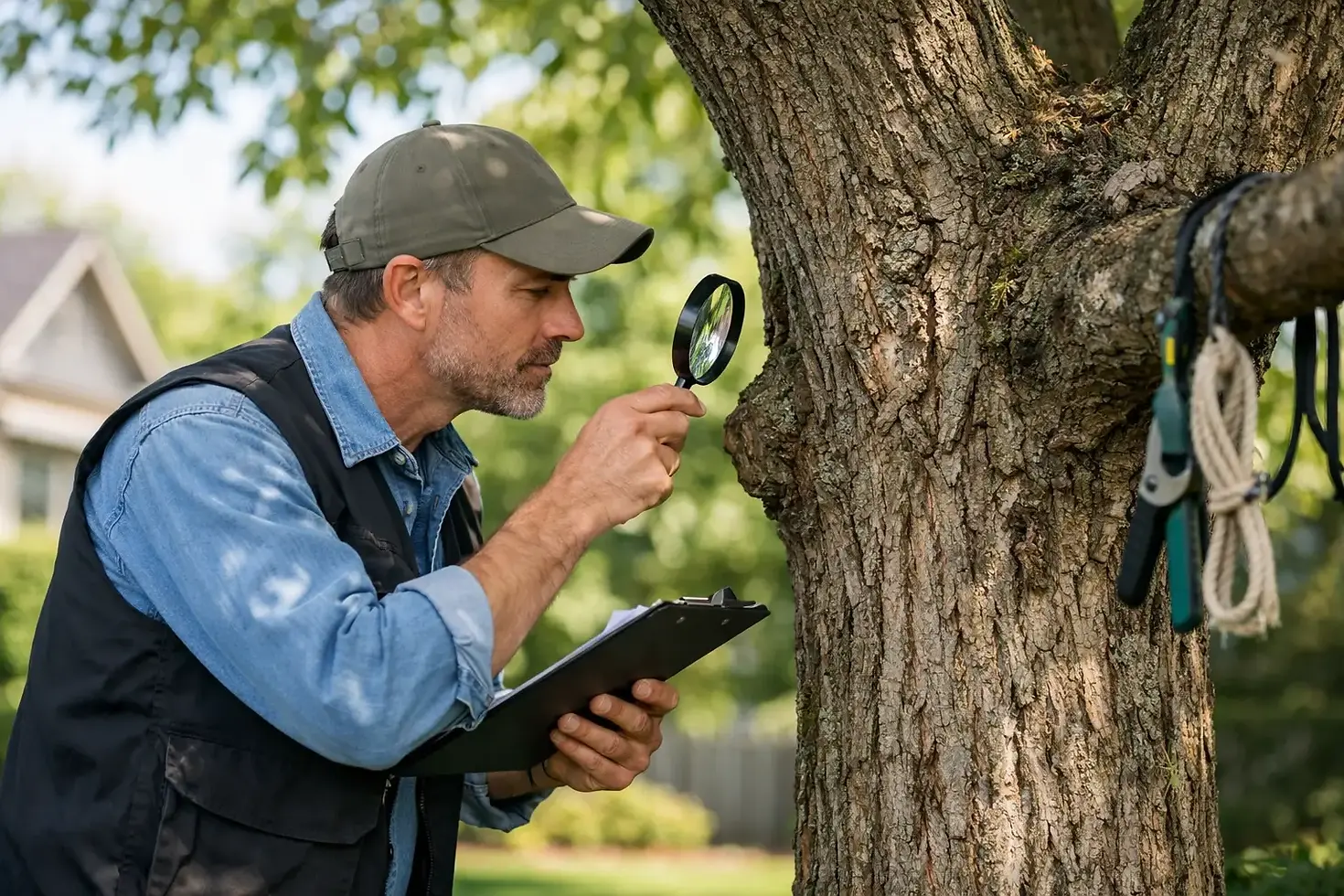
Tree Inspection Guide for Homeowners

A healthy-looking tree can still be a serious risk. We see it often - a canopy that looks full from the street, but dead limbs, decay, or root problems are hiding closer to the trunk or below grade. For property owners, a practical tree inspection guide for homeowners starts with one simple idea: small warning signs are easier and less expensive to address before they turn into storm damage, fallen limbs, or full removal.
Trees add shade, privacy, and value to a property, but they also change over time. Weather, soil conditions, construction, insects, and age all affect stability and health. A homeowner does not need to diagnose every issue like an arborist, but knowing what to look for helps you catch problems early and make better decisions about trimming, pruning, treatment, or removal.
Why a tree inspection matters
Most tree problems do not start with a dramatic failure. They begin with stress. You might notice thinner leaves, bark coming loose, mushrooms at the base, or a branch that never leafed out this season. These signs do not always mean a tree is beyond saving, but they do mean the tree deserves a closer look.
Inspection is really about two things - safety and long-term property care. A compromised tree near a house, driveway, fence, play area, or utility line creates obvious risk. Even when there is no immediate danger, neglected tree issues can spread and affect curb appeal, lawn growth, and nearby plantings. Early action gives you more options.
A tree inspection guide for homeowners: what to check first
Start by stepping back and looking at the full tree from several angles. Then move closer. A good visual check works from the top down and from the outside in.
Look at the canopy
The canopy tells you a lot about overall health. A full, balanced crown usually points to a tree that is functioning well, while bare sections, sparse leafing, or one side declining faster than the other can signal stress or internal damage.
Dead branches are one of the clearest warning signs. Large dead limbs can fall without much notice, especially after wind, heavy rain, or wet snow. Cracked limbs, hanging branches, and areas where branches rub against each other also deserve attention. If a limb extends over a roof, driveway, or walkway, the level of concern goes up.
Leaf condition matters too, but context is important. Yellowing leaves, undersized leaves, early leaf drop, or patchy growth can point to drought, root problems, pests, disease, or soil compaction. Sometimes the issue is temporary. Sometimes it is the first visible sign of decline.
Check the trunk
The trunk should look solid and stable. Deep cracks, open seams, cavities, and peeling or missing bark can all indicate structural weakness. Not every hollow area means a tree must come down, but decay in the trunk should never be brushed off, especially on a mature tree close to structures.
Pay attention to whether the trunk is straight or has recently shifted. A tree that has developed a new lean, especially after a storm, may have root failure or unstable soil conditions. An old lean is not always a problem if the tree has compensated over time. A fresh lean is different.
You should also look for fungal growth, including shelf-like conks or mushrooms attached to the trunk or appearing at the base. Fungi often indicate internal decay. The exact risk depends on the species, the location, and how much wood has been compromised, which is why professional inspection matters when fungus is present.
Inspect the root flare and ground around the tree
The root area is one of the most overlooked parts of a tree inspection. Many major failures begin below the canopy. Start at the base where the trunk widens into the root flare. It should be visible, not buried too deeply under mulch or soil.
Watch for heaving soil, exposed roots that appear damaged, trenches from recent work, or signs of compaction from repeated foot traffic or equipment. If the ground is lifting on one side of the tree or cracking near the base, that can point to instability. Root damage is especially common after driveway work, grading, utility installation, or landscaping changes.
Mulch helps when it is applied correctly, but too much piled against the trunk can trap moisture and encourage decay. A mulch volcano is not just unattractive - it can contribute to bark damage and root stress over time.
Common red flags homeowners should not ignore
Some issues can wait for a scheduled visit. Others need prompt evaluation. A split trunk, a major broken limb, a sudden lean, or a tree that has lost a large portion of its canopy after a storm should move to the top of the list.
The same goes for visible decay near the base, repeated branch drop without storms, or trees growing into utility lines. If a tree is close enough to hit your house, garage, fence, or parked vehicles, even moderate defects deserve serious attention. It depends on the species, size, and exact location, but risk changes quickly when there is a target nearby.
A tree can also be hazardous while still technically alive. Homeowners sometimes assume green leaves mean the structure is sound. That is not always true. Internal decay, root loss, and weak branch attachments can exist in a tree that still leafs out.
Seasonal timing makes a difference
A strong tree inspection guide for homeowners should account for seasonality. Trees reveal different problems at different times of year.
Spring is useful for checking bud break, leaf size, and whether branches are recovering evenly after winter. Summer makes canopy density easier to judge and can highlight drought stress or pest activity. Fall is a good time to spot dead limbs once some leaves drop and to prepare for winter storms. Winter, when structure is easier to see, can reveal crossing limbs, storm damage, and trunk defects that are hidden in full foliage.
After major weather events, inspect sooner rather than later. Heavy wind, saturated soil, ice, and snow can expose weaknesses that were already present.
What homeowners can do and what should be left to professionals
A visual inspection from the ground is useful. Climbing ladders, cutting large limbs, or working near power lines is not. That line matters.
Homeowners can monitor changes, take photos over time, and note when symptoms first appeared. That information helps an arborist evaluate whether a tree is declining slowly, reacting to weather, or showing signs of structural failure. You can also keep the base clear, avoid damaging roots during yard work, and make sure mulch is applied properly.
What should be left to professionals is anything involving heights, heavy cutting, rigging, decay assessment, or risk near buildings and utilities. The right equipment and training make a major difference, especially when a tree is unstable. A bad cut can weaken a tree further. A missed defect can lead to property damage.
When to schedule a professional tree inspection
If you are seeing obvious warning signs, schedule one right away. But even without a visible problem, some properties benefit from routine inspection. Mature trees near homes, trees that have been topped or poorly pruned in the past, and trees affected by construction should be checked periodically.
This is especially relevant for homeowners in older neighborhoods across Bucks County, Montgomery County, and Chester County, where large established trees are part of the appeal and part of the maintenance responsibility. Bigger trees provide more value, but they also require more attention because defects can carry greater consequences.
A professional inspection can help answer the questions homeowners usually care about most: Is this tree safe, can it be improved with pruning, does it need cabling or monitoring, or is removal the safer choice? Those are not decisions to guess on.
Edds Tree Service Inc. works with homeowners who want clear answers, practical recommendations, and safe solutions backed by the right equipment and field experience. In many cases, the best outcome is not removal - it is targeted pruning, cleanup, or corrective care that protects both the tree and the property.
Good tree care starts before there is a problem
The best time to inspect a tree is before it forces the issue. Regular checks help you catch storm damage, stress, and structural concerns while there is still time to respond calmly and affordably. If something about a tree on your property looks off, trust that instinct. A closer look today is often what prevents a bigger problem later.


Comments