





How to Choose Tree Removal Company Right

A low quote can look great until a crew shows up without the right equipment, drops limbs across your fence, and leaves a stump, brush pile, and ruts behind. If you are figuring out how to choose tree removal company services for your property, the real job is not just finding someone who can cut a tree down. It is finding a team that can handle the risk, protect your property, and leave the site in good shape when the work is done.
Tree removal is one of those services where experience shows up quickly. A qualified company thinks beyond the trunk. They look at nearby structures, power lines, driveway access, lawn impact, underground concerns, cleanup needs, and what comes next for the space. That matters whether you are removing one hazardous tree near the house or clearing part of a lot for a larger improvement project.
How to choose tree removal company services without guessing
Start with the basics, but do not stop there. Most property owners know to ask about price and availability. Those matter, but they are not enough on their own. The better questions are about insurance, equipment, crew experience, and what the estimate actually includes.
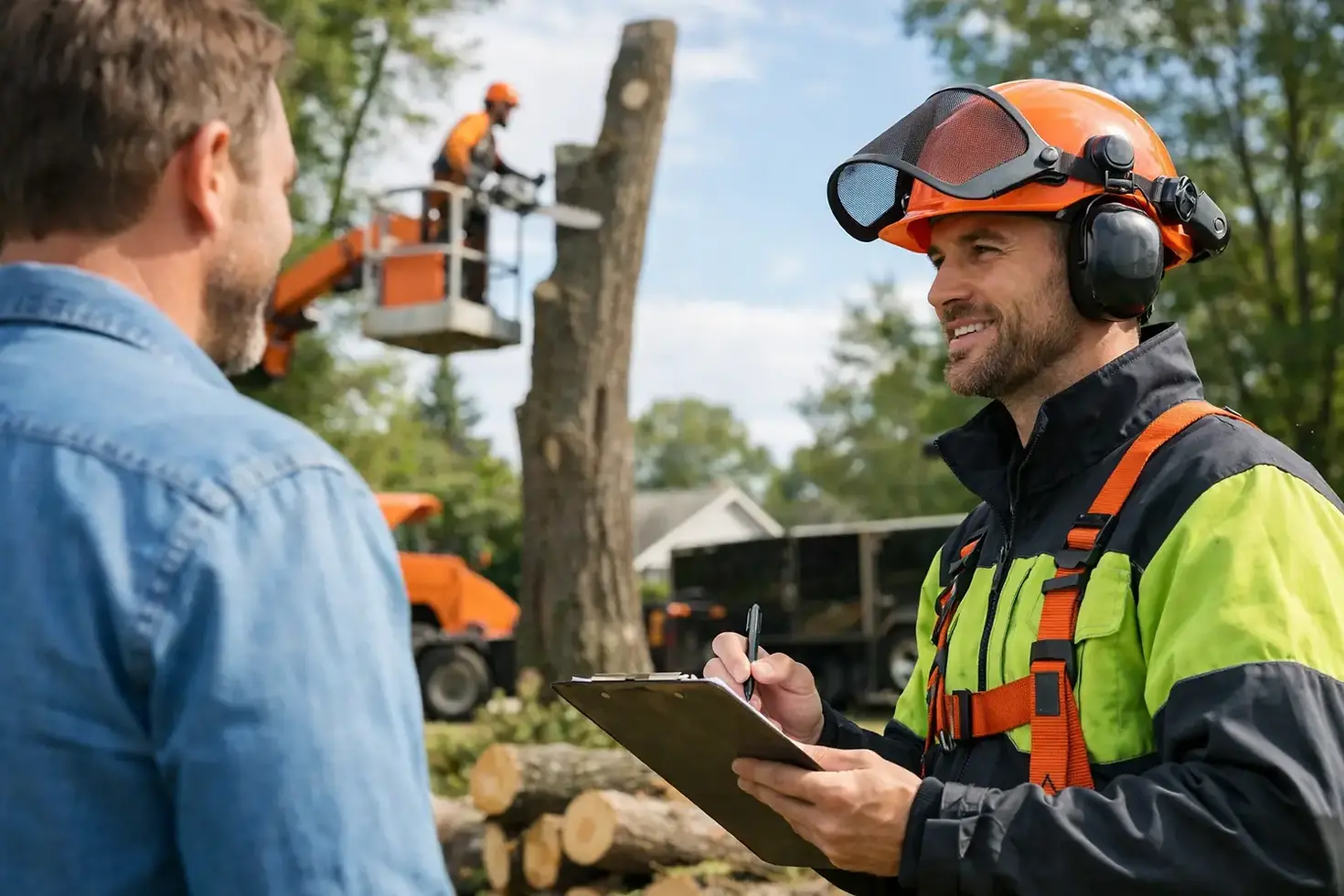
A professional tree removal company should be able to explain its process clearly. If a tree is leaning over a roof, split from storm damage, or surrounded by tight landscaping, the approach should reflect that. Some jobs require climbing and rigging. Others call for bucket trucks, cranes, or specialized removal equipment. When a company can explain why it plans to remove the tree a certain way, that is usually a good sign that it has done this work many times before.
Insurance is another non-negotiable. Tree work is high-risk, and homeowners should never be left exposed if something goes wrong. Ask whether the company carries liability insurance and workers' compensation coverage. A legitimate provider should be comfortable answering that question. If the response is vague or defensive, move on.
Experience also matters, but not in a vague marketing sense. You want experience with jobs like yours. Removing a dead tree in an open yard is different from dismantling a large tree over a garage, handling storm damage, or clearing multiple trees on a property line. The more specific the company is about similar work, the more confidence you can have in the result.
Look beyond the cutting itself
One of the biggest mistakes homeowners make is assuming every quote covers the same scope of work. It rarely does. Some companies price only the removal of the tree itself. Others include brush hauling, log removal, stump grinding, cleanup, and even repair of disturbed areas. If you compare estimates without checking the details, the lowest number can become the most expensive once add-ons start appearing.
Ask what happens after the tree is down. Will the crew haul away all debris? Will they cut firewood lengths only if requested? Is stump grinding included or separate? Will they rake and clean the area, or is rough cleanup the standard? These details shape the final value of the job.
This is especially important if the removal is part of a bigger property plan. Sometimes tree work connects to grading, reseeding, mulch installation, or site cleanup. Working with a company that can handle more than just the cut can save time and reduce the need to coordinate multiple contractors.
What a strong estimate should tell you
A good estimate should feel specific, not rushed. It should identify what is being removed, what equipment may be used, what is included in cleanup, and whether there are extra charges for stump grinding, log hauling, or difficult access. It should also reflect the conditions on your property, not a one-size-fits-all price.
Be careful with quotes given over the phone without a site visit, especially for anything more than a simple job. Tree removal is too dependent on height, spread, lean, decay, obstacles, and access conditions to price accurately from a quick description. In-person evaluation usually leads to better planning and fewer surprises.
Price still matters, of course. But a much lower estimate often means something is missing. Sometimes it is insurance. Sometimes it is cleanup. Sometimes it is enough labor and equipment to do the work safely. A fair estimate from a qualified company is usually a better investment than a cheap quote that creates new problems.
How to judge professionalism before the job starts
You can learn a lot before anyone unloads a saw. Notice how the company communicates. Do they return calls promptly? Do they show up when scheduled? Do they answer questions directly? Tree work is technical, but customer service still matters. A dependable company should make the process easier, not harder.
It also helps to pay attention to how they talk about safety. Professional crews do not treat safety like a slogan. They treat it like the center of the job. That means controlling drop zones, protecting nearby structures, using the right equipment, and adjusting the plan when conditions change. If the company seems casual about risk, that is a red flag.
Local reputation matters too, especially for property service work. Homeowners in Bucks County, Montgomery County, and Chester County often deal with mature trees, tight residential lots, and weather-related damage. A company that regularly works in these environments is more likely to understand the practical challenges of access, cleanup, and protecting neighboring properties.
When certifications and equipment make a real difference
Not every removal requires the same level of technical complexity, but qualified arborists and modern equipment can make a major difference on difficult jobs. If the tree is diseased, structurally compromised, close to a home, or part of a larger tree health concern on the property, deeper expertise matters.
This is where it helps to ask a few practical questions. Who will be on site? Is the crew trained for hazardous removals? What equipment will they use to protect the property and complete the work efficiently? A well-equipped company can often do a cleaner, safer job with less disruption to the yard.
There is also a trade-off here. A highly equipped, fully insured company may not be the cheapest option. But in tree work, lower overhead is not always a benefit to the customer. Sometimes it just means fewer protections, fewer capabilities, and more risk pushed back onto the property owner.
Questions worth asking before you hire
If you are still narrowing down options, keep your questions simple and practical. Ask whether the company is insured, whether cleanup is included, whether stump grinding is part of the quote, and how they plan to handle your specific tree. Ask how soon they can schedule the work and whether they foresee any access issues or preparation on your part.
It is also reasonable to ask what happens if the scope changes once the work begins. A trustworthy company will explain that upfront. For example, hidden decay, equipment access problems after heavy rain, or utility concerns can affect the job. What you want is not a promise that nothing will change. You want a company that communicates clearly if something does.
If you speak with a provider that handles both removals and related property services, that can be a plus. Edds Tree Service Inc., for example, works with homeowners who need more than a single cut - from stump grinding and cleanup to broader property improvement support. That kind of range can be useful when the removal is just one part of getting the yard or lot back into shape.
Red flags that should slow you down
Pressure tactics are a problem. So are vague estimates, cash-only demands, and promises that sound too easy for a risky job. Be cautious if someone offers to remove a tree immediately after knocking on the door, especially after a storm, without a clear written scope.
Another red flag is a company that does not ask many questions about the site. Tree removal is not guesswork. Access, grade, nearby structures, fencing, septic areas, and lawn conditions all matter. A contractor who barely looks at the tree may not be planning carefully.
Finally, trust your read on the interaction. Professionalism is usually visible early. If a company is disorganized, hard to reach, or unclear before the job, there is a good chance the service experience will follow the same pattern.
Choosing the right company usually comes down to one simple standard: hire the team you would trust to work a few feet from your home, your vehicles, and the parts of your property you cannot afford to replace. When a company combines skill, insurance, clear communication, and complete cleanup, the difference is obvious long after the tree is gone.


Comments