





How Does Stump Grinding Work?

That old stump in the yard usually becomes a problem long after the tree is gone. It gets in the way of mowing, attracts insects, creates a tripping hazard, and keeps the area from looking finished. If you have asked, how does stump grinding work, the short answer is this: a powerful machine cuts the stump down into small wood chips below ground level so the area can be cleaned up and used again.
For most property owners, stump grinding is the fastest and least disruptive way to deal with a leftover stump. It does not mean the entire root system is pulled out of the ground. Instead, the visible stump and the upper portion of the root flare are mechanically ground down. That difference matters because it affects cost, cleanup, and what you can do with the area afterward.
How does stump grinding work in practice?
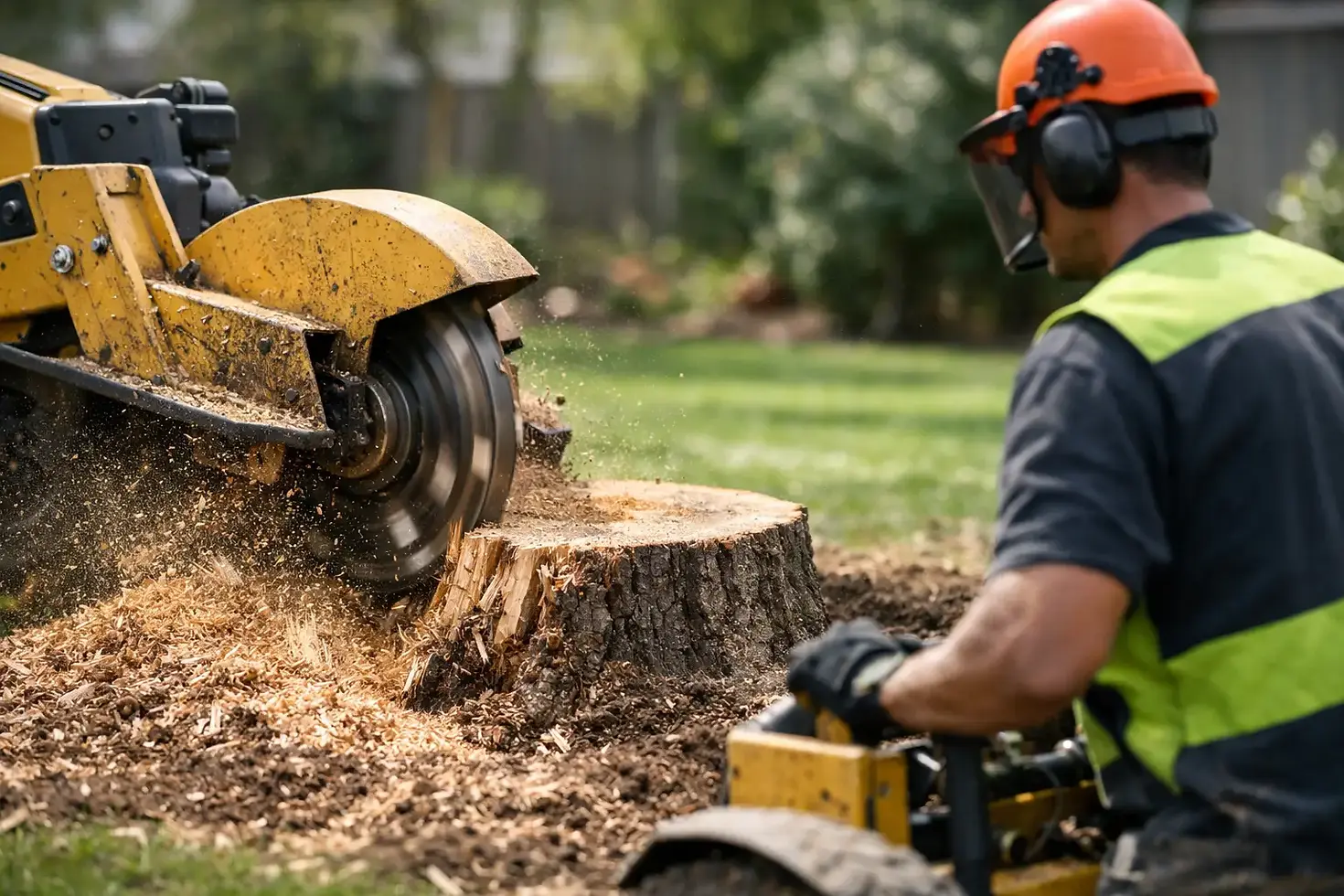
Stump grinding uses a specialized machine with a rotating cutting wheel. That wheel is fitted with strong teeth designed to chip away at wood a little at a time. The operator positions the grinder over the stump, lowers the wheel, and sweeps it side to side while gradually working deeper into the wood.
As the machine cuts, it turns the stump into a pile of mulch-like wood chips. The stump is typically ground below the surface so the area can be covered with soil, seed, or sod. The exact depth depends on the stump, the location, and what the customer wants to do with the space next.
This is one reason professional equipment matters. A small stump in an open front yard is one thing. A large hardwood stump near a fence, driveway, utility area, or landscaped bed takes much more control. The goal is not just to remove the stump. It is to do it safely and without unnecessary damage to the surrounding property.
What happens before the grinding starts?
A proper stump grinding job starts with evaluating the site. The size of the stump, tree species, surface roots, slope of the yard, and access for equipment all affect the plan. A stump in a tight backyard may require a different machine than one in a wide-open lot.
The area also needs to be checked for obstacles. Rocks, metal edging, buried debris, and nearby structures can change how the job is approached. If the stump is close to utility lines or underground services, extra caution is required. This is one of the biggest reasons stump grinding is not a simple do-it-yourself task. The machine is powerful, and the work area has to be managed carefully.
Before grinding begins, the crew will usually clear loose debris and prepare the area so the machine can work efficiently. If the stump is very tall, it may be cut lower first to improve access and control.
The machine does not pull the stump out
This is a common point of confusion. Stump grinding is different from full stump removal or excavation. The grinder shaves the stump down and breaks it apart below grade, but it does not rip the entire root ball out of the ground.
That approach has real advantages. Excavating a stump can leave a large hole, disturb nearby soil, and damage surrounding lawn or hardscape. Grinding is usually more controlled and more practical for residential properties where preserving the yard matters.
How deep does stump grinding go?
In many residential jobs, the stump is ground several inches below ground level. Often that is enough to let the area be backfilled and finished cleanly. If the goal is basic lawn restoration, that depth is usually suitable.
If you plan to plant grass, install sod, or improve the look of the area, standard grinding is often all you need. If you want to build over the spot, plant a new tree in the exact same location, or do more extensive landscaping, the depth and scope may need to be adjusted.
This is where expectations matter. Surface roots near the stump can also be ground if needed, but not every root across the yard is removed. Trees can have broad root systems, and chasing every root is rarely necessary or cost-effective. The right approach depends on what is causing the problem and what you want the finished area to look like.
What is left after stump grinding?
The most noticeable thing left behind is a pile of wood chips mixed with soil. Since the stump has been ground into small pieces, those chips need to be handled as part of the cleanup process. In some cases, they can be left on site for use as mulch in another area. In other cases, they are removed so the hole can be filled with clean soil.
There is also usually a shallow depression where the stump was. That spot can be filled, leveled, and prepared for grass seed or sod. If the stump was large, it may take some settling over time, so it is not unusual to add a little more topsoil later.
The underground roots will naturally decay over time. That process is gradual and usually not a problem. What matters most for the property owner is that the visible stump is gone, the hazard is removed, and the area can be restored.
Will the stump grow back?
It depends on the tree species. Some trees are more likely to send up new shoots from remaining roots or the stump area if they are not fully addressed. Many stumps, once ground properly, will not create ongoing issues. Others may need monitoring if the species is aggressive.
That is another benefit of working with an experienced tree service. It is not just about running a machine. It is about understanding the tree, the site, and the best way to prevent future problems.
Why homeowners choose stump grinding
For most residential properties, stump grinding is chosen because it solves several problems at once. It improves safety by removing a hard obstacle from the yard. It improves appearance by getting rid of the leftover stump that makes the property look unfinished. It also makes mowing and landscaping easier.
There is a property value side to it too. A clean, usable yard is easier to maintain and more appealing. If you are preparing for landscaping work, recovering from storm damage, or finishing a tree removal project, stump grinding helps complete the job the right way.
In areas with active outdoor living spaces, curb appeal matters. A visible stump near a patio, driveway, or front lawn can stand out for all the wrong reasons. Removing it is a practical upgrade, not just a cosmetic one.
Why professional stump grinding is the safer choice
Stump grinders are heavy, high-powered machines with fast-spinning cutting wheels. Used incorrectly, they can throw debris, damage property, and create serious safety risks. The work also requires awareness of grade changes, underground concerns, and surrounding structures.
Professional crews know how to control the machine, protect nearby surfaces, and leave the site in good condition. They also know when a stump is straightforward and when it is not. A stump near retaining walls, utility corridors, fences, or landscape features requires more than basic equipment handling.
For homeowners in places like Bucks County, Montgomery County, and Chester County, hiring a qualified tree service is often the more efficient path. The right crew can remove the stump, manage the cleanup, and help prepare the area for whatever comes next.
When stump grinding is worth doing right away
Some stumps can sit for a while without causing major issues, but waiting is not always the better option. If the stump is in a high-traffic area, near a driveway, in the middle of a lawn, or close to a planned landscape project, taking care of it sooner usually makes sense.
Older stumps can become more of an eyesore over time. They may collect moisture, encourage decay, and attract pests. They can also make routine yard work more frustrating than it needs to be. Once the tree is gone, finishing the stump is often the step that lets the property actually feel restored.
If the area is part of a larger cleanup or improvement plan, stump grinding also helps avoid doing work twice. It is easier to level, seed, mulch, or redesign a space once the stump is out of the way.
A stump does not have to stay in the yard just because the tree is already gone. When the job is handled with the right equipment and the right approach, the process is straightforward, efficient, and much easier on the property than most people expect. If you are looking at a leftover stump and wondering whether it is time, it usually is.


Comments