





Best Ways to Clear Wooded Lots for Building

A wooded lot can look like a simple clearing job until the first tree comes down. Mature trees may be close to a home, power lines, fences, septic areas, or neighboring property. Hidden stumps, steep grades, wet ground, and heavy brush can also change the scope quickly. The best ways to clear wooded lots start with a site plan, the right equipment, and experienced crews who know how to protect the parts of the property you want to keep.
For homeowners and landowners, the goal is rarely to remove every tree. You may be preparing for a new home, an addition, a driveway, a pasture, a lawn, or a cleaner view. A professional land-clearing plan should make the property more usable without creating drainage problems, damaging healthy specimen trees, or leaving behind a field of stumps and debris.
Start With the Purpose of the Clearing Project
The right clearing method depends on what the land will become afterward. A lot being prepared for construction needs more complete clearing and grading than a backyard expansion. A property owner creating a walking path or opening up a view may only need selective tree removal, brush clearing, and pruning.
Before work starts, identify the building footprint, access routes, utility corridors, drainage paths, and trees worth preserving. Large, healthy trees can add shade, privacy, and value, but only if they are far enough from the future structure and have sound root systems. Trees with major decay, storm damage, poor branch structure, or roots growing into a planned construction area are usually better removed before building begins.
This early assessment also helps prevent a common mistake: clearing more land than necessary. Removing every tree may seem efficient at first, but it can expose a yard to erosion, reduce privacy, and increase the cost of restoring the landscape later.
The Best Ways to Clear Wooded Lots Depend on Density
There is no single machine or approach that fits every wooded property. The best ways to clear wooded lots are based on tree size, brush density, terrain, access, and the condition of the soil.
Selective Tree and Brush Removal
Selective removal is often the best choice for residential properties where homeowners want to preserve the character of the lot. Crews remove hazardous, overcrowded, dead, or poorly located trees while retaining healthy trees that provide shade and screening.
This method requires careful planning. Trees may need to be climbed, rigged down in sections, or removed with specialized equipment when there is limited room to drop them. It takes more precision than clearing an open field, but it protects structures, lawns, retained trees, and neighboring properties.
Selective clearing works especially well when opening a backyard, creating a safer play area, improving sunlight for grass, or preparing a defined area for a pool, shed, patio, or garden.
Full Lot Clearing for Construction or Development
When a property is being prepared for a new build, garage, driveway, or major landscaping project, full clearing may be necessary within the approved work area. This usually includes removing trees, underbrush, vines, saplings, fallen wood, and stumps so the site can be graded properly.
The key is to clear in phases. First, the crew establishes safe access and identifies trees that require controlled removal. Next comes brush and tree removal. Stumps are then ground or excavated based on the future use of the area. Finally, the site is cleaned so grading, topsoil installation, seeding, sod, or construction can move forward.
A clean lot is not always a finished lot. If heavy equipment has compacted the soil, the ground may need additional preparation before grass seed or landscaping will establish successfully.
Forestry Mulching for Thick Brush and Small Growth
Forestry mulching can be an effective option for overgrown lots with dense brush, small trees, invasive growth, and tangled vegetation. A mulching machine processes vegetation close to ground level and leaves a layer of organic mulch behind.
This can be faster than cutting and hauling every piece of brush, and it can reduce erosion on slopes. It is particularly useful for reclaiming neglected areas, creating trails, maintaining property boundaries, or opening lightly wooded acreage.
However, forestry mulching is not the complete answer for every site. Large trees, major stumps, construction pads, and areas requiring precise grading often need additional work. The remaining mulch layer can also affect future planting and site preparation, so the final use of the land should guide the decision.
Plan for Stumps Before Trees Come Down
Stumps are easy to overlook during the planning stage, but they matter. They can interfere with mowing, construction, fencing, drainage, and future landscaping. Left in place, they may also attract insects, create trip hazards, and continue producing unwanted sprouts.
Stump grinding is typically the right solution for residential yards and landscape areas. A grinder reduces the stump below ground level, allowing the area to be backfilled and restored. For building pads, utility trenches, or areas that require deep excavation, full stump and root removal may be needed instead.
The choice depends on what will happen next. Grinding is less disruptive to the surrounding soil and landscaping. Excavation is more extensive but may be necessary where underground roots would interfere with construction. A knowledgeable crew will explain which approach makes sense before the job begins, not after the trees are already gone.
Protect Utilities, Soil, and Retained Trees
Land clearing should improve a property, not create expensive problems beneath the surface. Before equipment enters the lot, underground utilities should be marked. Overhead lines, septic systems, wells, drainage features, and property boundaries should also be considered.
Soil conditions deserve the same attention. Wet ground can rut easily under heavy machines, while steep lots may need erosion-control measures to keep sediment from washing into lower areas. Timing can make a difference. In some cases, waiting for drier conditions protects the lawn and reduces the amount of restoration needed afterward.
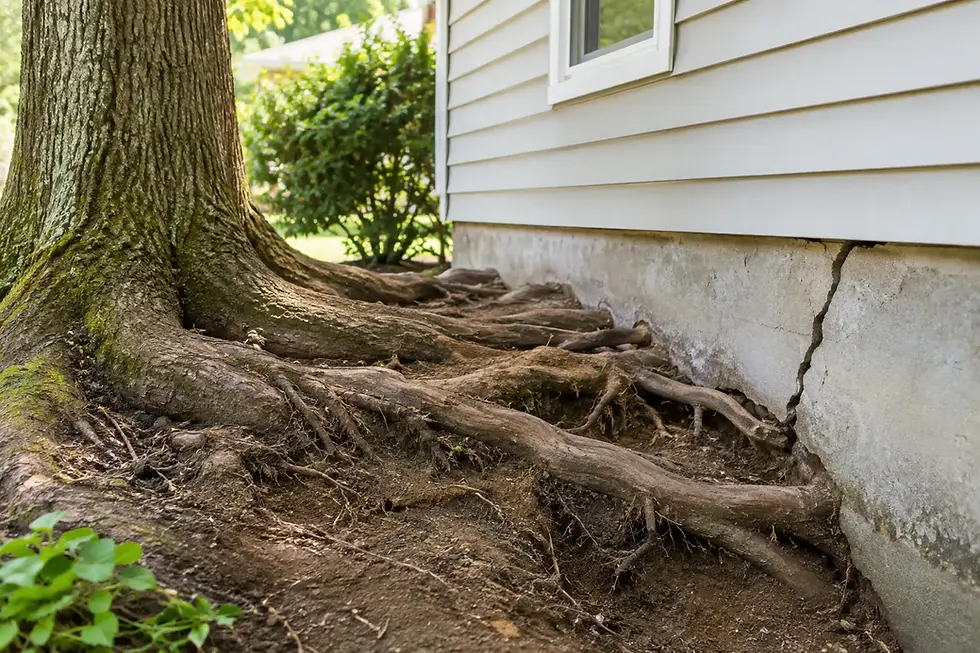
Retained trees need protection too. Their roots often extend well beyond the visible canopy. Driving heavy equipment over root zones, piling logs against trunks, or changing the soil level around the base of a tree can cause decline months or years later. Establishing protected areas around valuable trees helps preserve the landscape features that made the property attractive in the first place.
Have a Plan for Logs, Brush, and Wood Chips
Clearing generates more material than most property owners expect. Tree trunks, limbs, brush, leaves, stumps, and wood chips all need a destination. Leaving piles behind may slow the next phase of work and create an unfinished appearance.
Some logs can be cut into firewood if the species, size, and condition make that worthwhile. Wood chips may be useful as mulch around trees or on natural paths. Other debris should be hauled away or processed on site, depending on the project and local requirements.
A full-service crew can handle removal and cleanup as part of the clearing process, so you are not left arranging separate hauling after the tree work is complete. This is especially valuable on properties with narrow access, large volumes of brush, or tight project schedules.
Prepare the Cleared Area for What Comes Next
The final stage determines whether the cleared lot looks ready or rough. After tree removal and stump work, the ground may need grading to direct water away from buildings and prevent low, muddy areas. Fresh topsoil can improve poor or disturbed soil before grass seed or sod is installed.
If the goal is a lawn, the soil should be leveled, cleared of large roots and debris, and prepared for the right seed or sod selection. If the goal is construction, the builder may have specific requirements for the building footprint, access, and grading. Coordinating the clearing plan with the next contractor helps avoid duplicated work and unnecessary costs.
For projects in Bucks County, Montgomery County, and Chester County, local conditions can vary widely from one property to the next. Older neighborhoods, wooded estates, sloped yards, and limited access all call for a tailored plan instead of a one-size-fits-all approach.
When Professional Clearing Is the Better Choice
Homeowners can handle small brush piles and light yard cleanup, but wooded-lot clearing quickly moves beyond basic yard work. Large trees, chain saws, elevated cutting, heavy machinery, utility risks, and debris hauling require trained crews and proper equipment.
Professional service is particularly important when trees are near structures or wires, the lot has large stumps, access is limited, or the project involves building preparation. Edds Tree Service Inc. can coordinate tree removal, stump grinding, land clearing, cleanup, mulch, topsoil, grass seed, and sod support to help move a property from overgrown to usable.
A well-cleared lot should feel like the beginning of a better property, not another cleanup project. Start with a clear purpose, protect what adds value, and make sure the last step leaves the ground ready for the plans you have in mind.


Comments