





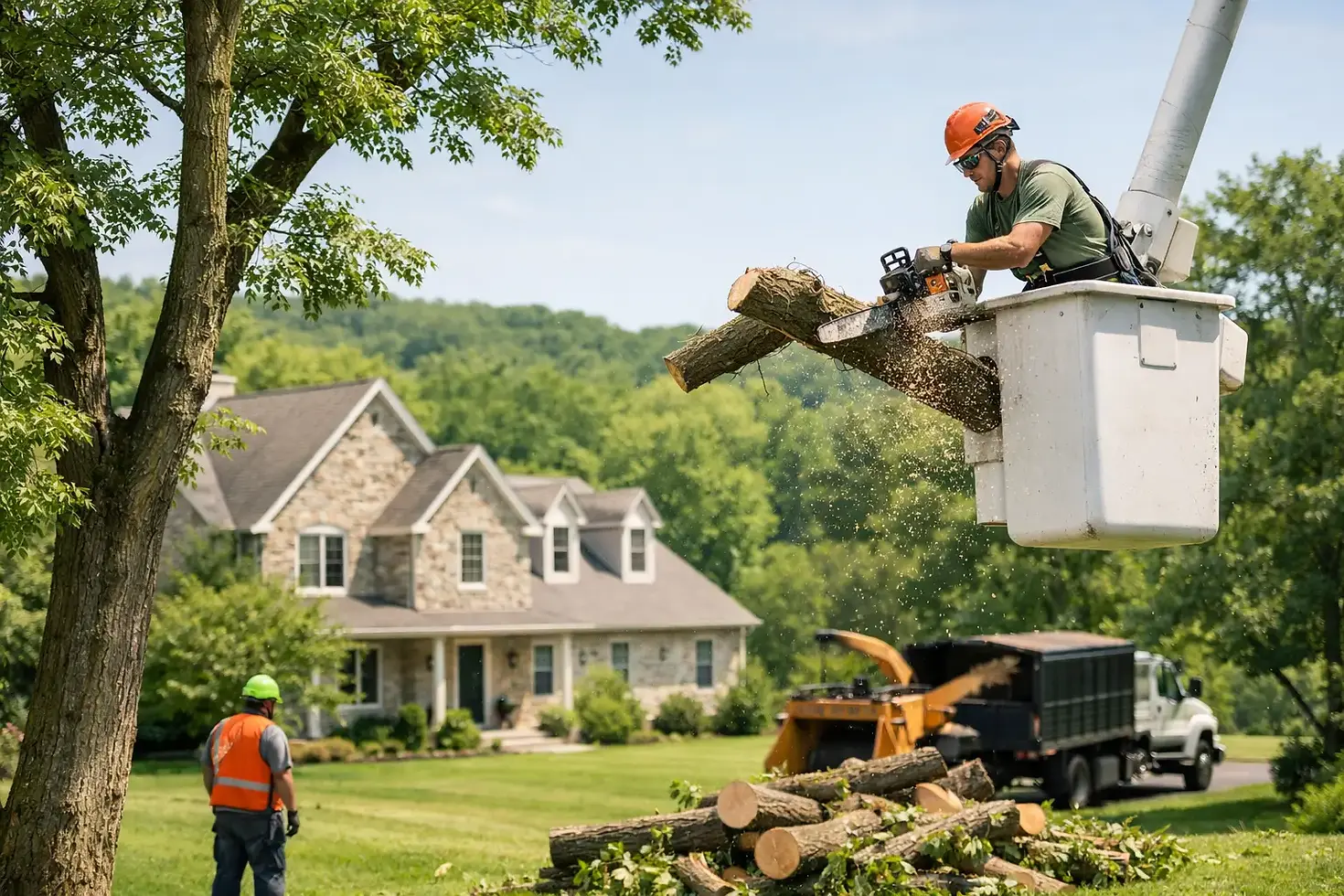
Tree Trimming Chester County Homeowners Need
- Edd Asencio
- Jun 29
- 6 min read

A tree that looked fine in spring can become a real problem by late summer. One heavy limb starts hanging over the driveway, branches scrape the roof in every storm, and the yard feels darker and more crowded than it should. That is usually when tree trimming Chester County homeowners have been putting off moves from a nice idea to a necessary service.
Professional trimming is not just about making a tree look cleaner. It is about managing risk, protecting tree health, and keeping your property functional. When trimming is done correctly, trees are safer, stronger, and better shaped for the space they occupy. When it is done poorly, the damage can last for years.
Why tree trimming matters on Chester County properties
Chester County properties often have mature trees, established neighborhoods, and a mix of open lawns, wooded edges, driveways, patios, sheds, and fences. That means trees are not growing in isolation. They are growing close to homes, utility areas, parking spaces, and outdoor living areas where overgrowth quickly becomes a problem.
A well-timed trimming service can reduce the chance of storm damage, improve visibility near driveways and walkways, and help prevent limbs from rubbing against roofs or siding. It can also improve sunlight across the yard, which matters if grass is thinning or landscape beds are struggling.
There is also the appearance factor, and it should not be dismissed. Overgrown trees can make an otherwise well-kept property look neglected. A properly trimmed canopy creates a cleaner outline, better balance, and a more intentional look without making the tree seem stripped or unnatural.
What professional tree trimming in Chester County should accomplish
Tree trimming should have a clear purpose. On one property, the goal may be storm clearance over a house and driveway. On another, it may be removing deadwood, lifting lower limbs, or thinning selective areas to improve structure and light penetration.
A good trimming job does not mean taking off as much as possible. In fact, overcutting is one of the most common mistakes property owners deal with after hiring the wrong company or allowing untrained work. Removing too much canopy at once can stress a tree, encourage weak regrowth, and leave it more vulnerable to disease or weather damage.
Professional trimming starts with the condition of the tree, its species, its age, and its location on the property. A healthy mature shade tree near a home is handled differently than a fast-growing ornamental tree near a fence line. The right crew looks at the whole picture before a single cut is made.
Safety is part of the job, not an extra
Tree work is high-risk work. That becomes even more obvious when limbs extend over rooftops, garages, parked vehicles, or neighboring property. The job is not simply climbing and cutting. It requires planning, proper equipment, controlled lowering techniques when needed, and careful cleanup once the work is done.
That is why many homeowners call professionals when they notice cracked limbs, storm-damaged branches, or trees growing too close to structures. A trained crew can identify what needs to come off, what should stay, and how to complete the work without turning a manageable issue into expensive property damage.
Signs your trees may need trimming now
Some trimming needs are obvious. Dead branches, low limbs, and storm breakage are easy to spot. Others build gradually until the tree begins interfering with how the property functions.
If branches are touching your roof, hanging over your driveway, crowding walkways, blocking windows, or creating dense shade over lawn areas, it is worth having the tree evaluated. The same is true if the canopy looks unbalanced, if one side is carrying too much weight, or if branches are crossing and rubbing against each other.
Deadwood is another issue that should not sit too long. Dead limbs are unpredictable. They can fall during high wind, in heavy rain, or with no warning at all. That creates a hazard for people, vehicles, fences, and anything else below.
Not every tree needs the same approach
This is where experience matters. Some trees respond well to selective thinning. Others need crown cleaning, elevation, or structural pruning. Some should be trimmed during a specific season, while others can be handled more flexibly depending on condition and safety concerns.
The trade-off is simple. Waiting too long often makes the job larger and more expensive, but aggressive trimming at the wrong time or in the wrong way can create avoidable stress. The best results come from trimming that is tailored to the species and the problem being solved.
The difference between trimming for appearance and trimming for health
Homeowners often call for one reason and discover there is a second issue in play. A tree may look overgrown, but the bigger concern could be dead interior branches, storm splits, or weak limb attachments. In other cases, the tree may be healthy enough, but the canopy has become too large for the house, yard, or surrounding landscape.
Appearance-based trimming focuses on shape, clearance, balance, and curb appeal. Health-based trimming focuses on removing dead, damaged, diseased, or competing limbs so the tree can grow more effectively. The two often overlap, but they are not exactly the same.
That distinction matters because a tree can look tidier after a quick cut and still be poorly managed. The goal should be a result that looks better and functions better.
What homeowners should expect from a professional crew
A professional tree service should assess the tree first, explain the scope of work clearly, and perform the trimming with attention to both the tree and the surrounding property. That includes protecting lawn areas as much as possible, using the right equipment for the size of the job, and cleaning up debris thoroughly once the work is complete.
For many property owners, convenience matters almost as much as the trimming itself. It helps to work with a company that can handle more than one issue at a time. If a property also needs stump grinding, cleanup, clearing, mulch, topsoil, or grass repair after tree work, having one provider manage the full project saves time and avoids the usual back-and-forth with multiple contractors.
That is one reason local property owners often prefer a full-service company over a basic cut-and-go crew. Tree work affects the entire site, not just the canopy.
Tree trimming Chester County homeowners should not delay after storms
After storms, trimming needs can change fast. A branch may still be attached but cracked, split, or hanging under tension. Another may have shifted weight higher in the canopy without being visible from the ground. What looks minor can become dangerous the next time wind picks up.
Post-storm trimming is often about stabilization first. That may include removing broken limbs, reducing end weight, and correcting damage before it spreads. In some cases, a tree can be preserved with strategic trimming. In others, the damage is too extensive, and removal becomes the safer call. It depends on structure, species, and how close the tree is to homes or occupied areas.
This is where a fast professional assessment matters. The right decision is not always the cheapest short-term fix. It is the one that makes the property safer and prevents repeat problems.
Choosing a company for tree trimming in Chester County
Homeowners are right to be selective here. Tree trimming is not lawn mowing. The wrong cut can damage a valuable tree, and the wrong crew can damage your roof, fencing, driveway, or landscape.
Look for a company that communicates clearly, shows up with proper equipment, understands both tree care and site protection, and treats the job as more than branch removal. A dependable team should be able to explain what they recommend, why they recommend it, and whether the work is focused on safety, health, appearance, or all three.
Edds Tree Service Inc. works with property owners who want that kind of practical, start-to-finish service. Whether the need is routine trimming, storm cleanup, or a broader property improvement project, the goal stays the same - safe work, clean results, and a property that looks and functions better when the job is done.
If you have limbs over the house, dead branches in the canopy, or trees that have simply outgrown the space, this is the kind of work that gets easier when handled early. A well-trimmed tree does more than clean up the view. It gives your property room to breathe, and that is something you notice every time you pull into the driveway.


Comments